
Beatrice Wong, a digital media student. I understand the world through making. Sketching daily life in Hong Kong, photographing the quiet moments that reveal how people move through cities, writing narratives that capture emotional textures, i do believe these practices taught me that design begins with observation. My work has always sat between disciplines, such as creative writing meets digital media, photography informs spatial thinking, personal memory shapes interactive experience.
There’s a photo on my phone from three years ago — a purple sky bleeding through classroom windows after a brutal school day. Nothing special, no careful composition. Just me, exhausted, noticing something beautiful in the middle of ordinary chaos and walking to the window to capture the moment.
That photo saved nothing and everything. The sky is already gone, but somehow I’m still there.
It never got likes. It broke every rule I’d later learn about “good photography.” But somehow, it captured everything that mattered. Through the lens of my camera, I discovered that photography isn’t really about taking better pictures. It’s about learning how to feel again in a world designed to make us perform.

When Technology Creates Distance Instead of Connection
Digital photos are everywhere, documenting almost every moment of our lives. But scroll through Instagram for a few minutes, and you start to see a pattern: sunsets that look the same, travel photos staged for the perfect shot, street photography so technically perfect it resembles advertising rather than lived experience.
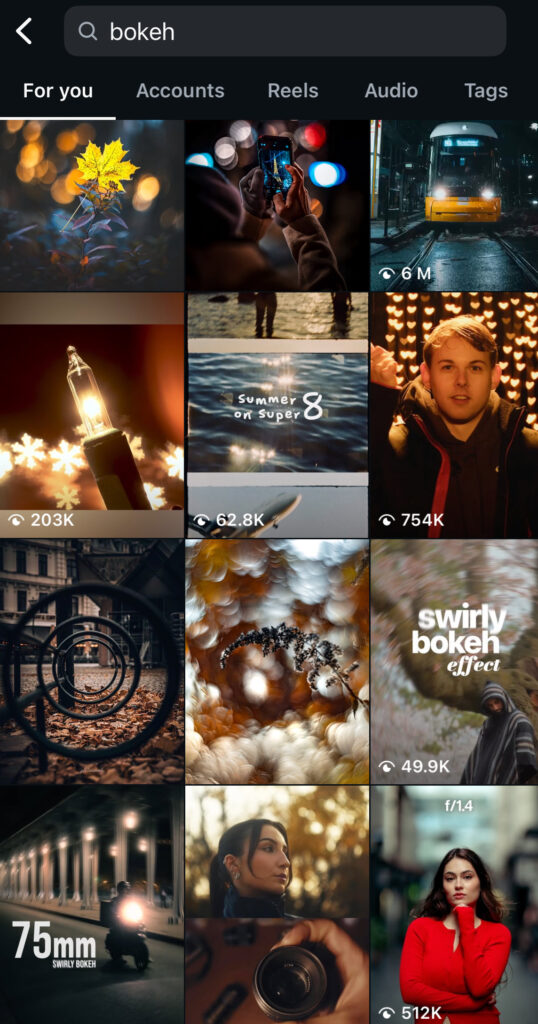
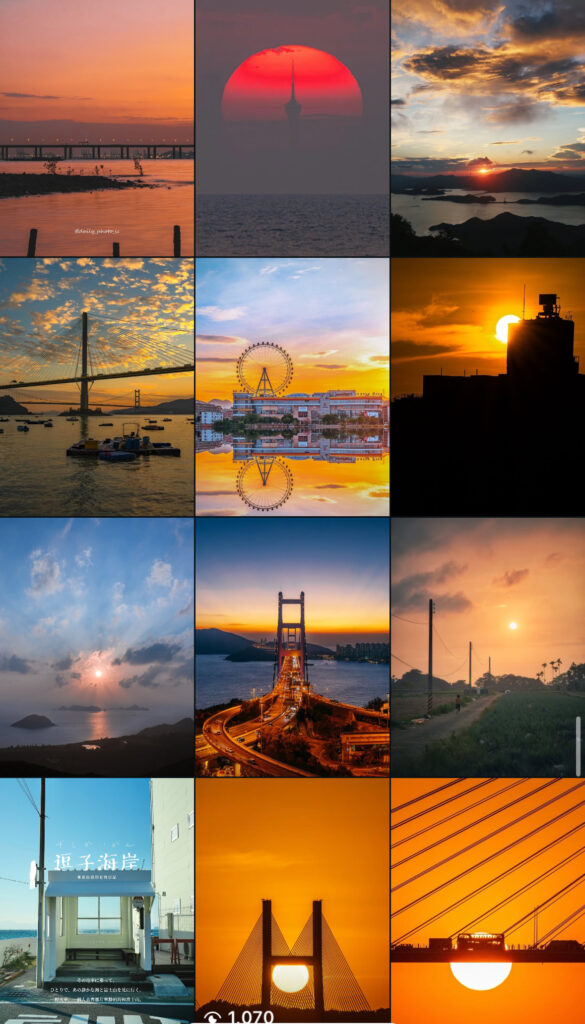
The problem isn’t photography itself. It’s what we’ve allowed it to become.
AI editing tools and AR filters have become incredibly advanced, putting complex image manipulation in the hands of anyone with a smartphone. No doubt—letting you erase unwanted objects, punch up colors, or even change the weather with an eerie level of precision 1. But all this convenience comes at a cost. Research suggests these tools are changing what a photograph even means, pushing us away from reality and toward a world where a pleasing aesthetic matters more than genuine emotion. As media theorist Morten Boeriis mentioned, digital manipulation changes how photos claim to be “true.” Photography is shifting from capturing reality to performing an emotion, a change that fits perfectly with social media filters that favor a certain mood over actual lived experience 2.
The attention economy just makes this distortion worse. Social media algorithms push content that gets more engagement—views, comments, likes—and the edits that boost these numbers get amplified. Studies have found that filtered photos are 21% more likely to be viewed and 45% more likely to get comments than unfiltered ones 3 4. This creates a subtle but powerful feedback loop:
“Your real experience isn’t enough.”
Over time, the platform trains us to choose performance over truth. I am not immune to this. I often stop scrolling when I see images with dramatic composition techniques or stylised filters, paired with captions that fit the mood of the photograph. This visual language has shaped what I now recognise as a “successful” photo, and I have a feeling I am not the only one. I believe every photographer goes through this stage, often mistaking it for improvement or growth. While it can be part of learning, the problem appears when you realise you are no longer creating for yourself.
How I Lost Myself Chasing Perfection
When I first started shooting with my phone, I wasn’t trying to be a “photographer.” I wasn’t performing for anyone, either. Honestly, I just wanted proof that on some random Tuesday in October, the sky looked exactly like that and made me feel something specific.
Walking the streets, everything felt aesthetic—the way the light hit the pavement, people crossing under the streetlights, kids playing. My eyes were capturing these perfect, fleeting moments, and I desperately wanted to keep them in a real way. I realized that recording them was a kind of narrative technique, and I figured I had a decent eye. So, I did what everyone eventually does: I bought a “real” camera.
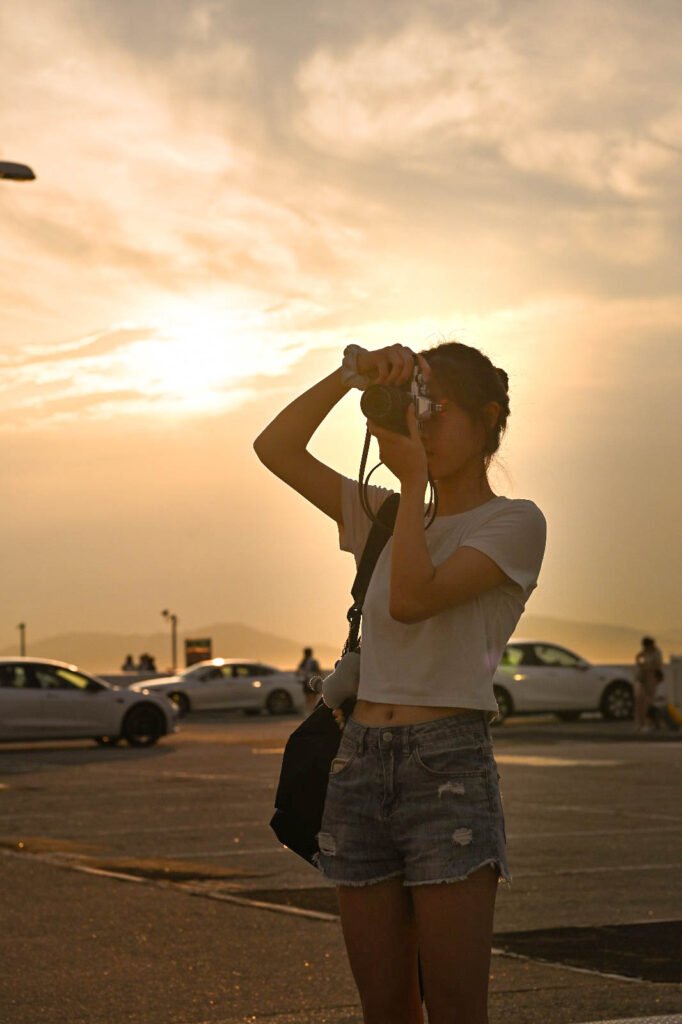
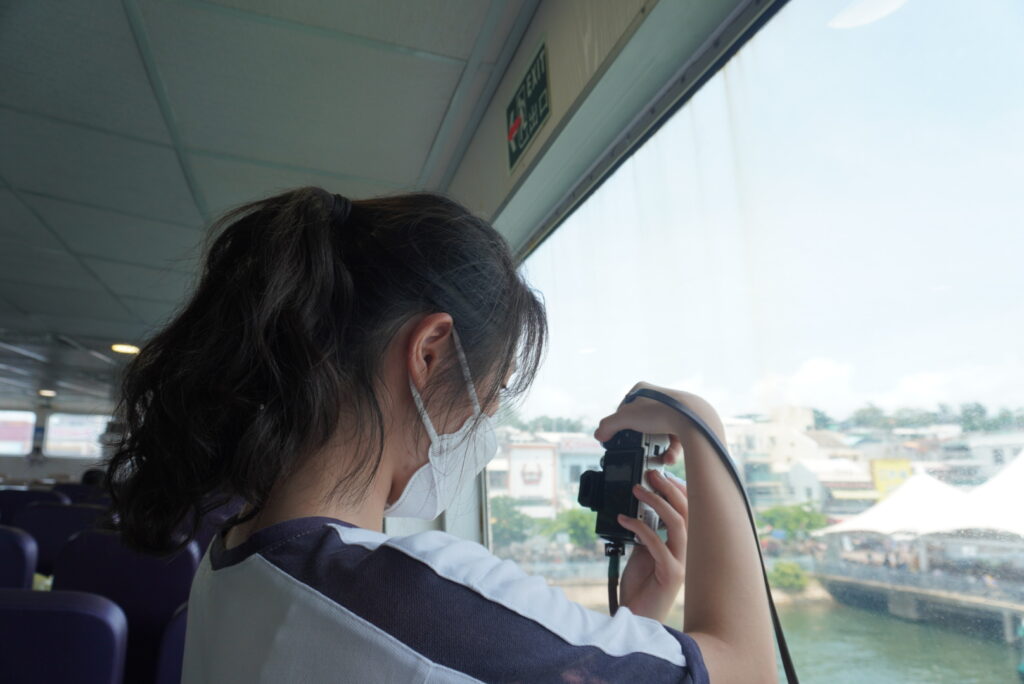
At first, it felt like real progress. I quickly learned the technical language: golden hour, rule of thirds, leading lines, depth of field. I began doing “city walks”—but I wasn’t really experiencing them, I was hunting through them. I photographed shadows stretching across wet pavement, reflections in storefront windows, strangers moving through urban geometry. All the visual tricks that would translate well to a screen. But even as I mastered the tricks, a nagging thought kept returning: I still wasn’t enough to truly narrate the scene.
My first camera was an Olympus OM-D E-M10 Mark II. It came with different filter modes and practically encouraged heavy post-processing. After the shoot, I’d apply huge edits in Lightroom. The results looked technically polished, professionally crafted. I started writing captions with song lyrics that I thought fit the mood. Everything appeared more sophisticated.
But everything that mattered got completely lost in the process of making something “Instagram-worthy.” The photos looked good. They just didn’t feel like mine anymore. I had become fluent in a visual language that wasn’t my own, speaking words I didn’t mean to people I’d never meet. The camera that was supposed to help me see better had somehow made me blind.
I was technically successful—I could capture light trails with precision, manipulate colors to match trending aesthetics, and apply the filters that research promised would boost engagement by 45%. But the more technically accomplished I became, the more hollow the work felt. This wasn’t about abandoning photographic skill—skills matter. The problem was that I had stopped learning technique to express my vision and started learning it to replicate everyone else’s. I had traded authenticity for algorithmic approval, and in chasing what made photography “successful,” I had lost what made it mine. I didn’t have deep feelings about what I captured anymore, they explained “my city is beautiful,” a shallow enough sentiment to caption anything.
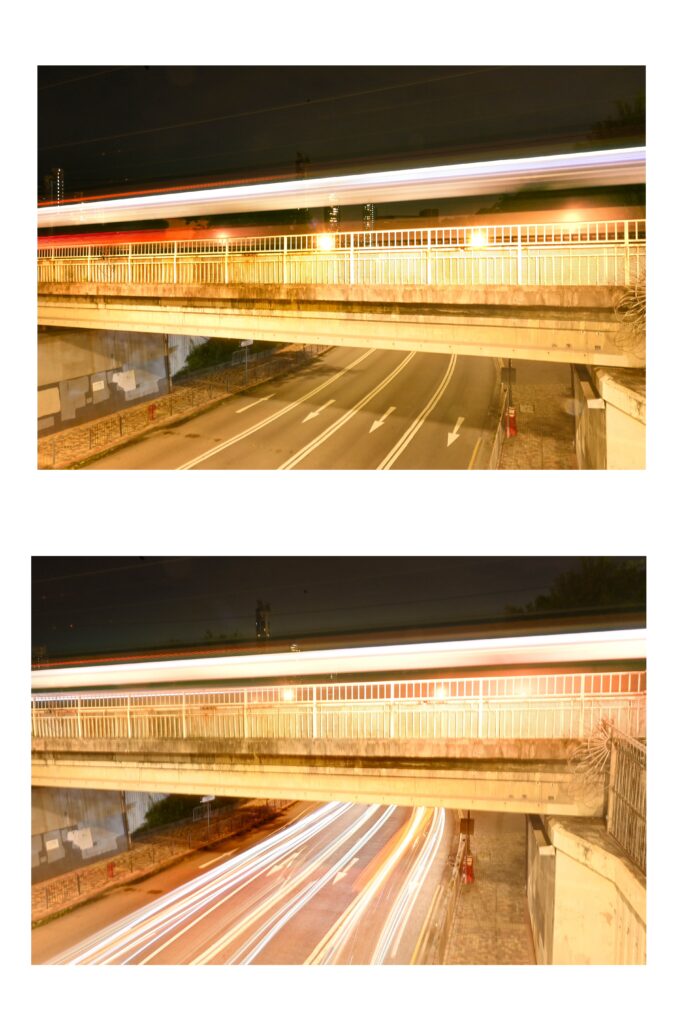
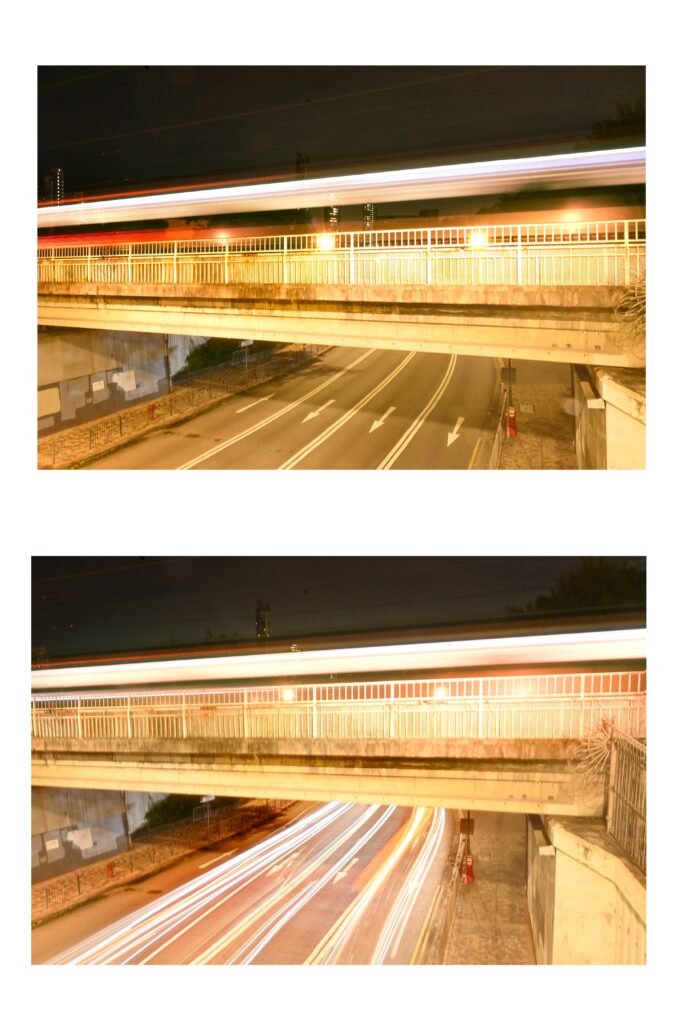
There was nothing cool about photographs that could have been taken by anyone, edited by anyone, posted by anyone. I had disappeared into the feed.
Finding My Way Back: The Being Hong Kong Turning Point
The real shift came during my summer internship at Being Hong Kong. The company’s aim was not simply to produce visually appealing photographs. As a short-term content creator, I was tasked with documenting sites of cultural value, covering local activities, and writing captions that balanced storytelling with research. This work demanded something completely different from my previous routine, as it prioritised meaning, context, and human connection over surface-level visual appeal.
This was the moment I realised that what truly matters in digital media is not aesthetic polish, but authenticity, human presence, and purposeful creation.
I consciously reduced my reliance on strong filters and shifted toward moments that felt lived, researched, and emotionally resonant. The entire process inverted. I began with field trips, interviews, and in-depth research. By truly understanding the story I wanted to tell, photography became the final step rather than the starting point.
My “city walks” remained important, but now I asked different questions: Why this specific place? What makes it special? What does it reveal about the people who live here? I stopped capturing what everyone else captured and started looking for what only I could see. The meaning wasn’t in the edits—it was in my connection to the moment. And in finding that connection, I found myself again.
Emotion trumps technical perfection. I wanted my work to evoke feelings: to reclaim, to relive, to rethink. Photography became more than just visual memory. It became shared cultural storytelling, a way of saying, “I was here, this mattered, and maybe it will matter to you too.”
Hong Kong artist Sampson Wong became an unexpected guide in this transformation. His work combines walking, video, technology, and writing to explore the emotional experience of a place. He showed me that photography and digital media can coexist meaningfully when you balance the technical with the human—transforming the digital image from mere content into genuine experience. The tools don’t have to be the enemy. They just can’t be the master.
Rethinking Technology as Partner, Not Master
I began treating editing tools and platforms as creative partners—ways to enhance meaning rather than erase imperfection. I finally regained authorship. I am in the process of learning how to make my photography embrace imperfection, context, and emotional honesty. That means slightly off-kilter compositions that capture genuine surprise. It means grain and shadow that convey atmosphere. It means the beautiful messiness of actual life.
This matters beyond my personal practice. In an age where AI-generated visuals are increasingly indistinguishable from real ones, audiences have grown more sceptical. They are hungry for the human touch—for evidence that someone actually stood somewhere and felt something. Technology is not the enemy of emotion; it can be a mediator for deeper human experience. The key is conscious use: appropriate editing rather than blind algorithmic obedience.
The purple sky is gone. But the feeling remains. And in the end, that is the only thing worth photographing.
Reference
- Yang, J., 2024. The application and impact of AI in post-photography processing: a discussion from technology to art. Industry Science and Engineering, 1(6), pp. 7–12. Available at: https://www.researchgate.net/publication/390832230 (Accessed: 17 December 2025).
- Boeriis, M., 2023. Towards a grammar of manipulated photographs. In: A. H. Petersen & K. H. Møller (eds.) Digital Photography and Everyday Life: Empirical Studies on the Use and Meaning of Images. Cham: Springer, pp. 255–272. Available at: https://link.springer.com/chapter/10.1007/978-3-031-42064-1_13 (Accessed: 17 December 2025).
- Zolfagharifard, E., 2015. The science of Instagram success: filtered photos are 21% more likely to be viewed and warmer tones get more comments. Daily Mail, May. Available at: http://www.dailymail.co.uk/sciencetech/article-3091562 (Accessed: 17 December 2025).
- Bakhshi, S., Shamma, D.A., Kennedy, L. & Gilbert, E., 2015. Why We Filter Our Photos and How It Impacts Engagement. Proceedings of the International AAAI Conference on Web and Social Media, 9(1), pp.12–21. Available at: https://ojs.aaai.org/index.php/ICWSM/article/view/14622 (Accessed: 17 December 2025).